
About the Author
Sister Jordan Thomas, O.P. SAGI Torchbearer & SAGI Senior Advisor, Inspiring Faith and Theocentric Education
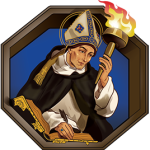
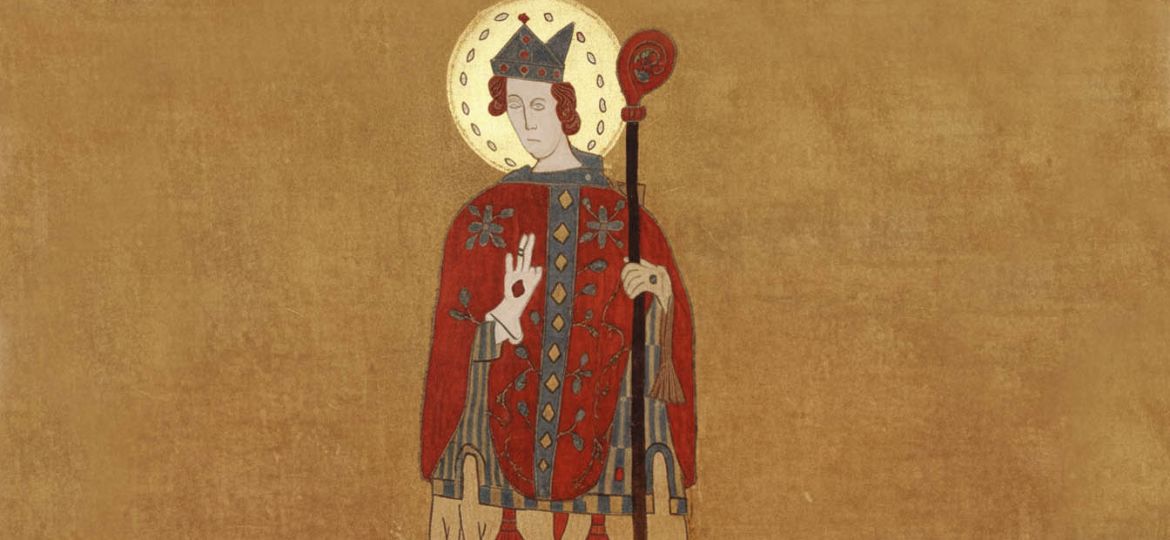
ST. THORLAK OF SKÁLHOLT, PATRON OF ICELAND
Words of Wisdom: “...I have surrendered myself wholly to the will of God.... I am resigned, come what may––for I know that God, who ordains all for the best, however strange it may appear to our eyes, will have it so.... [L]et us trust in God and comfort ourselves with the thought that all is well if it be God’s will, since He best knows what is requisite and necessary to our temporal and to our eternal happiness!” (Wolfgang Amadeus Mozart) (1)
Though relatively little-known outside of Iceland, St. Thorlak Thorhallsson of Skálholt is one of the most eminent figures of Icelandic history. As he devoted himself to restoring the Church in his country, St. Thorlak not only carefully endeavored to guide the faithful of Iceland to heaven, but he also left an important legacy by his holy life.
STUDENT AND DEACON
St. Thorlak was born in the year 1133 on a farm in Fljótshlíð, Iceland and was the son of good Catholic parents. His father, Thorhall, had once been a merchant, and his mother, Halla, is described as having been a wise and prudent wife and mother. (2) Thorlak was gifted both with a keen intellect and with a naturally sweet and loving disposition––qualities which would be particularly fitting for the vocation to which God was leading him. (3)
Thorlak’s mother ensured that he would receive an education proper to his abilities; thus, at an early age, Thorlak left his home to live and study under the tutelage of a learned priest, Eyjólfr, in southern Iceland. (4) Eyjólfr prophesied Thorlak’s future mission for the good of the Church and that his holiness and wisdom would be unsurpassed by any living man in Iceland. Thorlak studied assiduously under his tutor, and he was ordained a deacon at the early age of fifteen years. (5)
AUGUSTINIAN CANON
Subsequent to his priestly ordination at the age of eighteen years, Thorlak left Iceland to study theology in France and England. While pursuing his studies, he joined the Canons Regular of St. Augustine (6): an ancient form of clerical religious life characterized by members living in community, the recitation of the Divine Office, and active priestly work. (7) After about six years abroad, Thorlak returned to Iceland so that he could perform his priestly duties for the benefit of his countrymen. (8)
“A MUCH BETTER BRIDE IS INTENDED FOR YOU”
Having returned to Iceland, Thorlak followed a simple way of life among his family. However, they began to urge him towards marriage, for, owing to the corruption of Catholic morality in Iceland at that time, it was customary for Icelandic priests to marry. Initially, Thorlak agreed to his family’s arrangements for him, and so he journeyed to meet a certain widow to ask for her hand in marriage. (9)
The night that Thorlak met the widow, he had a vision in which he saw a man in fine apparel who asked him, “What would your mission be here if you could decide?” Thorlak simply replied, “I do not know what will happen.” The man then continued, “I know that you intend to ask for a wife here. But you must not let that matter come up, because that will not happen. A much better bride is intended for you, and you shall take no other.” By these words, Thorlak understood that he was to devote himself to the Church as his Bride and thus to remain celibate his entire life; additionally, he understood that God had destined him for a work of great import in the Church. Thus, Thorlak broke off his engagement and returned home. (10)
EXEMPLARY PRIEST AND RELIGIOUS
Compared to much of Christendom, 12th-century Iceland had only recently been converted to Catholicism, particularly due to the efforts of missionary priests from Germany and Norway. (11) Although Catholicism had been proclaimed Iceland’s official religion in A.D. 1000, (12) only a century later, the Icelandic Catholic Church experienced a deterioration of morality, especially among the clergy. Such a decline was particularly evident in the forgotten necessity of priestly celibacy, the disregard of the sanctity of matrimony and the rules regulating it, the common practice of simony, and the otherwise widespread lack of religious fervor. (13)
However, unlike many other clerics in Iceland, Thorlak strove to be an exemplary priest and religious, devoting himself entirely to the salvation of souls. Moreover, he was soon blessed to meet a holy and likeminded priest named Bjarnheðinn, with whom he developed a strong friendship. Together, Thorlak and Bjarnheðinn worked to counteract the depravity which the Icelandic Church was experiencing: they preached and provided religious instruction, corrected immorality in a gentle and principled manner, and, above all, were themselves models of holiness. (14) An early source describes their efforts by saying that “they lit up the path of mercy which leads to eternal rejoicing both with their excellent teaching in words and with their glorious examples. It could be seen in their daily behaviour that they seldom forgot what God said to his disciples: ‘Let your light shine before men....’” (15)
FOUNDER OF ICELAND’S FIRST AUGUSTINIAN MONASTERY
Thorlak and Bjarnheðinn had continued their work for six years when Thorlak was one day approached by a wealthy old man who wished to donate his estate so that it could become a monastery of Augustinian canons. The donor asked if Thorlak would be willing to establish the community and to serve as its superior (16)––to which Thorlak readily agreed, as he longed to return to the monastic life that he had followed while abroad. (17)
Thus, Thorlak founded Iceland’s first Augustinian monastery, (18) and it soon became the heart of faith and sanctity in Iceland. As prior––and, later, as abbot––of the monastery, Thorlak was known both for his paternal benevolence and for his strict implementation of the Rule that regulated the canons’ way of life. (19) The prayers and sacrifices of the canons, coupled with their application to learning and preaching, offered immense spiritual benefit to the country.
During this time, God often worked miracles of healing through Thorlak. Many ailing persons who traveled to the monastery to meet him would be cured of their illnesses when he prayed over them. Similarly, when he blessed sick animals, their health would be restored. (20)
BISHOP OF SKÁLHOLT
As the years passed, the bishop of Skálholt (one of Iceland’s two dioceses) became too ill to fulfill his duties as a bishop, so it became necessary for someone to be chosen to take his place. Accordingly, three priests were nominated as candidates for the episcopal election–– Thorlak being one of them. While the other two nominees were popular in Iceland, Thorlak’s person and merits were still unknown to many, and his humble silence aroused the curiosity of those who assessed the competence of the three candidates. However, those who knew him spoke at length of his holiness, his ability as a leader, and the soundness of his judgement. One man who knew Thorlak personally explained Thorlak’s silence by saying, “[He] strives to do everything best rather than to talk most.” (21)
In the year 1178, Thorlak, being about forty-five years old, was chosen to be the bishop of Skálholt. (22) Although it was an immense sacrifice for him to leave behind monastic life so as to fulfill his new duties as a bishop, he recognized that God had chosen him to bring about a necessary restoration of the Church in Iceland, so he immediately prepared to undertake this critical work. (23)
UNTIRING REFORMER
Thorlak’s episcopacy was guided by the ecclesiastical reforms established by Pope St. Gregory VII (d. 1085). (24) These reforms and their implementation––known as the Gregorian Reform––applied to the entire Latin Church with the aim of restoring necessary discipline and of restricting laity’s influence in ecclesiastical matters. Concretely, this included measures such as the firm enforcement of clerical celibacy, the prohibition of lay investiture, and the proscription of simoniacal practices. (25)
Thus, Thorlak strove to reform his diocese by promoting Catholic morality, correcting abuses, reforming the clergy, and resolving the diocese’s financial predicament. (26) Further, Thorlak emphasized the importance and sacredness of all aspects of the liturgy, teaching his priests to execute their offices––such as saying Mass––“beautifully in the sight of God.” (27)
Thorlak’s perseverance is especially admirable considering that he faced almost constant resistance on the part of both clergymen and Icelandic secular leaders––the latter of whom made several attempts on his life. (28) Thorlak worked in earnest for the salvation of all his countrymen: he encouraged and supported those who were striving to live virtuous lives, and, through prayer and kind admonitions, he helped convert many who were living in grave sin. Thorlak publicly denounced the immorality that was widespread in his country, and he made prudent use of ecclesiastical penalties by excommunicating, or otherwise punishing, some persons who refused to amend their lives. (29)
A RICH SPIRITUAL LIFE
Without neglecting the numerous duties that pressed him daily, Thorlak prioritized prayer, spiritual reading, study, and writing, for he strove as much as possible to continue the way of life that he had followed in his monastery. (30) Additionally, he fasted regularly and spent a great part of the night in prayer. (31)
Each morning, Thorlak laid prostrate in front of the altar, praying for the good of the entire Catholic Church. He often sang the Psalms throughout the day, and he had an especial interest in music and stories. Although Thorlak had a significant speech impediment, he preached frequently and in such a way that many were moved by his words. Further, Thorlak found a source of grace in the chronic pain and illnesses from which he constantly suffered during his bishopric. (32)
DEATH AND LEGACY
While on a journey in Iceland, Thorlak fell gravely ill and, upon his return home, became bedridden. About three months later, he received the last rites and, shortly thereafter, died on December 23, 1186, at the age of sixty years––fifteen of which he had spent as a bishop. (33)
Thorlak quickly gained recognition among the Icelandic faithful as an important saint of their country. In 1984, Pope John Paul II officially canonized St. Thorlak and confirmed his veneration as patron of Iceland. An ancient Icelandic tradition exists of observing December 23 (St. Thorlak’s feast day) as a holiday, known as Þorláksmesse––or Thorlak’s Mass. (34) St. Thorlak is also widely recognized as an unofficial patron of those with autism, as he is believed to have had a form of this condition himself. (35)
Þorláks Saga Byskups––an early account of Thorlak’s life and death––contains a list of many posthumous miracles attributed to his intercession, ranging from healings of sick and disabled persons and animals, to the calming of tempestuous seas, to the recovery of lost objects. (36)
PRACTICAL SOLUTIONS TO THE EVILS OF OUR DAY
St. Thorlak demonstrates a truly Catholic concern for the salvation of souls, coupled with a practical mentality which sought to apply solutions to the evils of his day. St. Thorlak’s life exemplifies the truth that, while it is certainly necessary to stand firmly against evil, we must not merely oppose it, but, in addition, seek ways to implement goodness in evil’s stead. To do this, we ourselves must first form the habit of thinking and acting according to what is true and holy. Although most of us may be unable to bring about large-scale reforms as St. Thorlak did, nevertheless, in our own modest spheres––such as in our homes, neighborhoods, churches, and workplaces––we can be instruments by which God can work to bring about much good. By striving to live holy lives, and by the study and assimilation of the truths of the Faith, we can be effective means by which God may work to bring the light of holiness and truth to those whom we encounter and into the world at large.
REFERENCES AND NOTES
- Wolfgang Amadeus Mozart, Letters of Mozart, ed. Hans Mersmann, trans. M. M. Bozman, (New York: Dorset Press, 1986), 105-106. Retrieved from: https://archive.org/details/lettersofmozart00mozarich/page/n5/mode/2up
- The Saga of Bishop Thorlak (Þorláks Saga Byskups), Viking Society for Northern Researched Text Series, Vol. XXI, trans. Ármann Jakobsson and David Clark, ed. Alison Finlay and Carl Phelpstead, (London: University College, 2013), 1, 33. Retrieved from: http://www.vsnrweb-publications.org.uk/Text%20Series/Thorlaks%20saga.pdf
- “St. Þorlákur, patron saint of Iceland and people with Autism 7561,” Iceland Insider. March 13, 2023. https://icelandinsider.is/uncategorized/st-thorlakur-patron-saint-of-iceland-and-people-with-autism/
- “The Early Bishops of Iceland,” The American Catholic Quarterly Review Volume XLVI, no. 184, (October, 1921): 537, Retrieved from: https://archive.org/details/sim_american-catholic-quarterly-review_1921-10_46_184/mode/2up5
- Saga, 2.
- Rev. Clifford Stevens, “St. Thorlak” in The One Year Book of Saints, (Huntington, IN: Our Sunday Visitor), 366. Retrieved from: https://archive.org/details/oneyearbookofsai00stev
- “Canons and Canonesses Regular” in The Catholic Encyclopedia, Vol. III. (New York: Encyclopedia Press, 1913).
- “St. Þorlákur,” Iceland Insider.
- Saga, 4, 5.
- Ibid., 5.
- “The Patron Saint of Iceland Saint Thorlak 1133-1193,” The Catholic Church in
Iceland, accessed January 7, 2026. https://catholica.is/en/saint-thorlak/ - “Early Bishops,” Quarterly Review, 529.
- “Patron Saint of Iceland Saint Thorlak 1133-1193,” The Catholic Church in Iceland, accessed January 7, 2026.
- Saga, 5-6. “Early Bishops,” Quarterly Review, 541.
- Saga, 6.
- “Early Bishops,” Quarterly Review, 538.
- Saga, 6.
- “St. Þorlákur,” Iceland Insider.
- Saga, 7-8.
- “Early Bishops,” Quarterly Review, 539.
- Saga, 9.
- Stevens, One Year Book of Saints, 366.
- “The Patron Saint of Iceland Saint Thorlak 1133-1193,” The Catholic Church in Iceland.
- Ibid.
- Thomas Oestreich, “Gregory VII” in The Catholic Encyclopedia, Vol. VI. (New York: Encyclopedia Press, 1913), 793-794.
- “Early Bishops,” Quarterly Review, 540; “Patron Saint,” The Catholic Church in Iceland.
- Saga, 13.
- Stevens, One Year Book of Saints, 366; “St Þorlákur,” Iceland Insider.
- Saga, 15.
- “Early Bishops,” Quarterly Review, 540-541.
- Saga, 13-14.
- Ibid., 13, 18.
- Ibid., 21.
- “Patron Saint,” The Catholic Church in Iceland; “December 23 is Þorláksmessa, the mass of St. Þorlákur, the patron saint of Iceland 7559,” Iceland Insider. March 13, 2023. https://icelandinsider.is/uncategorized/december-23-is-thorlaksmessa-the-mass-of-st-thorlakur-the-patron-saint-of-iceland/
- “St Þorlákur,” Iceland Insider.
- Saga, 24-31.